

Reviving the Rural Economy Through Research
Urvara Agricultural Research Foundation is a research-driven institution dedicated to restructuring rural economic systems by aligning private capital, cooperative finance, industrial development, public infrastructure, and ecological sustainability into integrated, scalable models.






The Structural Challenge in Rural India
Rural India possesses land, labor, and institutional reach, yet remains economically under-leveraged due to:
- Fragmented deployment of public infrastructure
- Limited penetration of long-term private capital
- Underutilization of cooperative banking networks
- Absence of industry-led employment ecosystems
- Disconnected planning between finance, infrastructure, and livelihoods
As a result, rural economies struggle to achieve scale, financial depth, and sustainability—leading to persistent income volatility and outward migration.
A Systems-Based Approach to Rural Transformation
Rural prosperity emerges when capital, institutions, and industry are designed as a single economic system rather than as isolated interventions.
Our work focuses on building models where:
- Private equity and long-term capital can finance productive rural industries.
- Industry generates stable employment by creating sustainable income streams.
- Government enables infrastructure development through aligned policies and targeted support.
- Cooperative banks expand credit by financing consumers, housing, and enterprises.
- Large banks and development institutions provide liquidity and absorb risk.

Model-Based Research, Not Regional Case Studies
Urvara does not focus on region-specific pilot projects. Instead, we develop nationally replicable economic models that can be adapted across geographies with minimal contextual modification.
Our research outputs include:
- Institutional frameworks
- Financial and capital stack designs
- Risk allocation and mitigation models
- Employment-to-credit transmission mechanisms
- Implementation roadmaps
Core Research Domains
Urvara’s work spans interconnected research domains that collectively shape rural economic systems:
- Rural Economic
Zones & Clusters - Cooperative Banking &
Institutional Finance - Private Capital &
Blended Finance Structures - Industrial Employment &
MSME Ecosystems - Modern Rural
Infrastructure & Amenities - Ecology-Aligned
Development Models
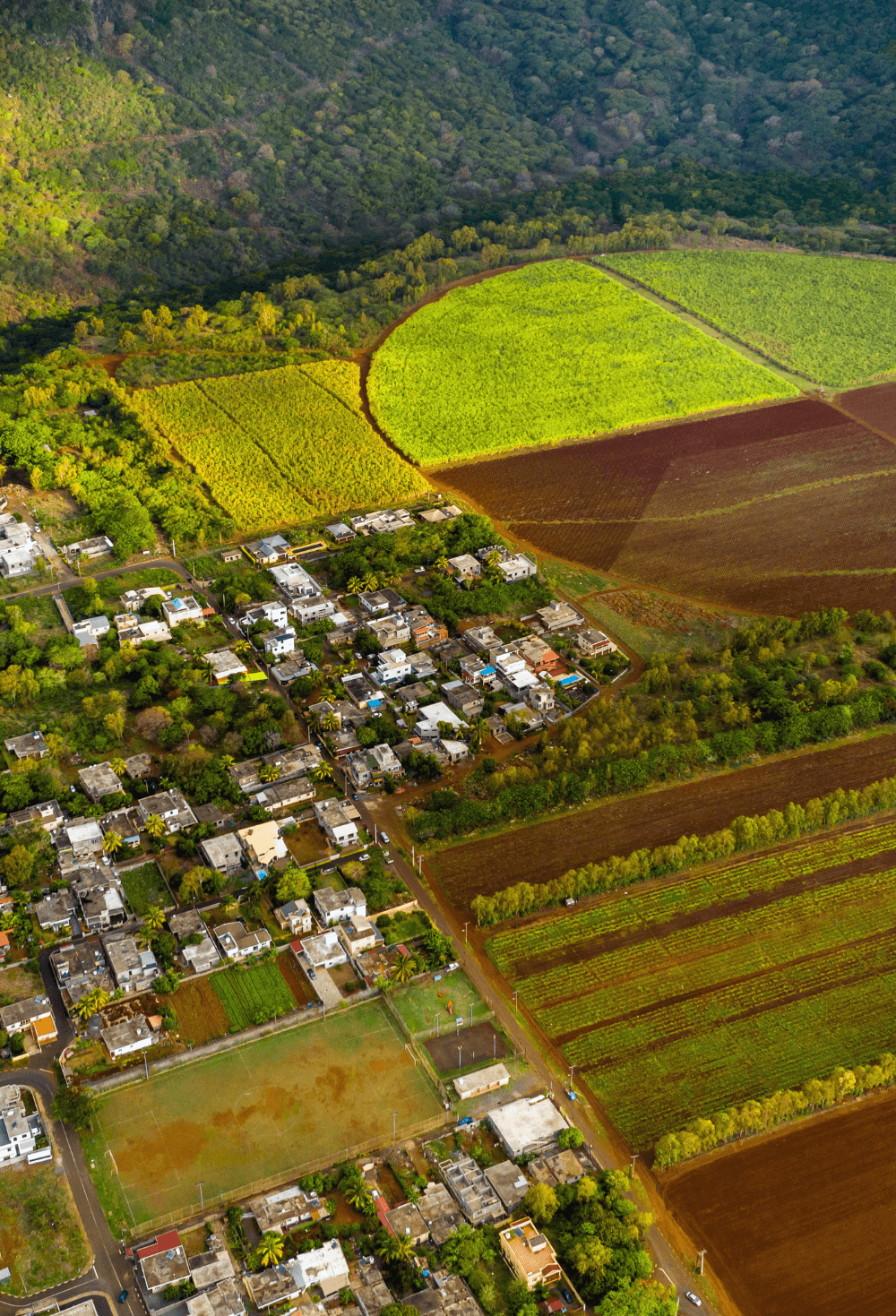

Cooperatives as Financial Anchors
India's cooperative banking system represents one of the deepest and most trusted financial networks in rural regions. Urvara's research positions cooperative institutions as:
- Anchors of local financial intermediation
- Channels for household and MSME credit expansion
- Partners in housing and consumption finance
- Gateways for integrating large-bank and DFI capital into rural economies
Modernizing and integrating cooperative finance is essential for sustainable rural economic deepening.
Economic Growth with Ecological and Social Balance
Urvara's models are designed to ensure that economic expansion:
- Respects local
ecological limits - Preserves water, soil,
and biodiversity - Strengthens community
participation and ownership - Creates long-term resilience
rather than short-term extraction

An Institutional Research Platform
Urvara operates at the intersection of:
- Economic theory and execution
- Finance and engineering
- Policy design and institutional capacity
We bridge the gap between:
• Policy intent and financial reality
• Capital availability and deployability
• Rural potential and economic outcomes

Designing the Next Generation of Rural Economic Systems
Urvara Agricultural Research Foundation exists to design the economic systems that rural India will depend on for the next several decades—systems that are financially sound, institutionally credible, ecologically balanced, and socially inclusive.